

The Nakasendo (literally “central mountain route”) was one of five major roads connecting Edo (modern-day Tokyo) and Kyoto during the Edo period. This historic route, also known as the “Samurai Road,” once bustling with warriors traversing its path, continues to captivate history enthusiasts and adventure seekers today. The hiking route from Magome-juku to Tsumago-juku is specifically known as the “Samurai Trail.” Among its many post towns, Nakatsugawa-juku, located in eastern Gifu Prefecture, stands out as a charming destination and serves as an excellent starting point for exploring the Nakasendo.
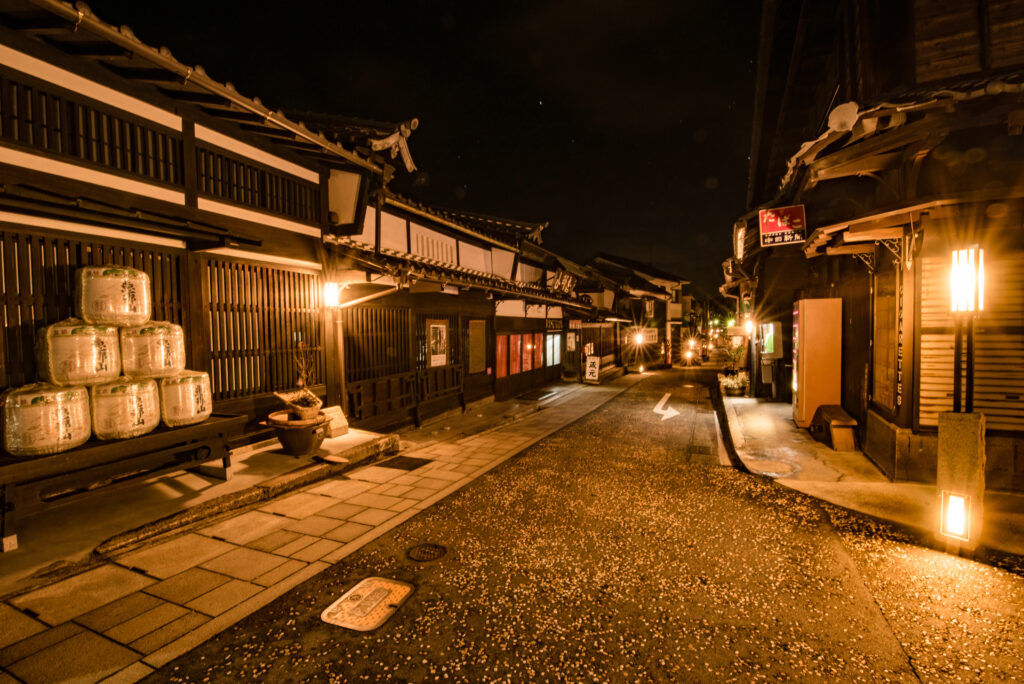
During the Edo period, Nakatsugawa-juku functioned as one of the 44 post towns along the Nakasendo, providing rest and accommodation for travelers. Walking through this town, where traces of the past remain vividly present, you might feel as if you’ve stepped back in time. The cobblestone streets, old merchant houses, and the beautiful natural landscapes surrounding the area offer a quiet escape from the hustle and bustle of modern life.
In this article, we’ll delve into the attractions of Nakatsugawa-juku, where your journey along the Samurai Trail begins. We’ll explore its historical significance, points of interest, and practical information for your visit. Additionally, we’ll introduce unique experiences in this region and a hidden gem ryokan that’s perfect for concluding your journey.

The History and Cultural Background of Nakatsugawa-juku
The Nakasendo as a Samurai Road
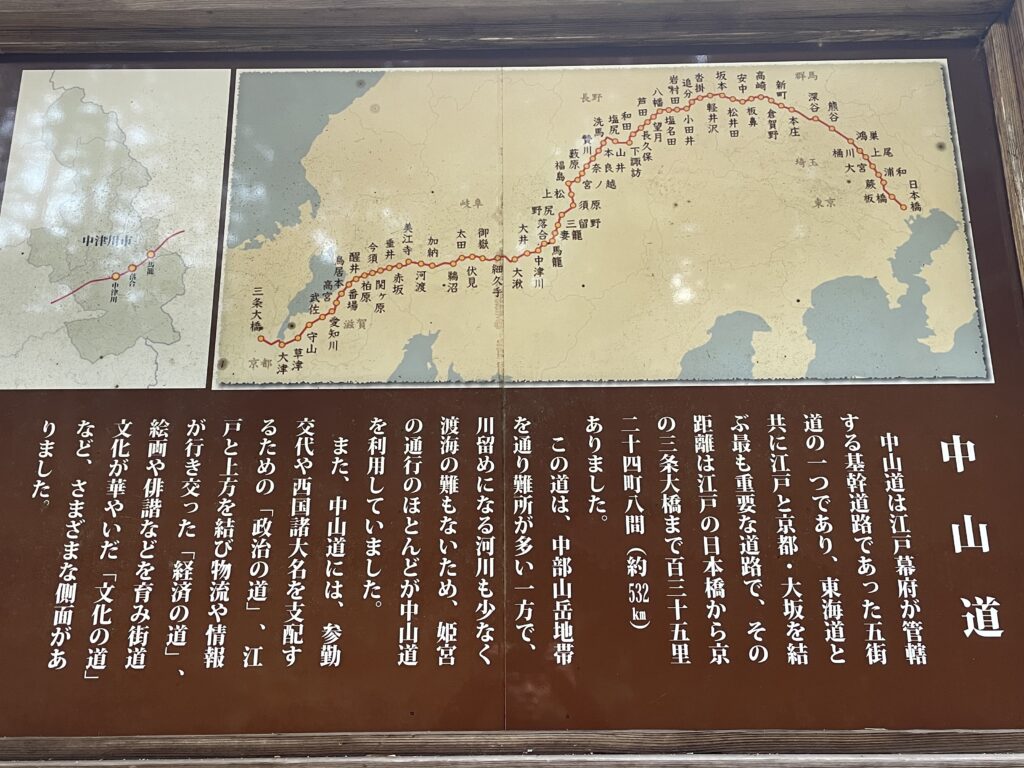
The Nakasendo was an inland route that passed through mountainous terrain. Although longer than the coastal Tokaido route, it offered advantages of being cooler in summer and having less snow in winter. This road was particularly important for daimyo (feudal lords) processions during the sankin-kotai (alternate attendance) system, with many samurai traveling this route.
The entire Nakasendo stretched approximately 530 kilometers, with 69 post towns established from Edo to Kyoto. These post towns not only provided food and accommodation for travelers but also functioned as part of the official communication and transportation system. Nakatsugawa-juku occupied an important position, flourishing as a post town at the boundary between the Kiso and Mino regions.
The Birth and Development of Nakatsugawa-juku
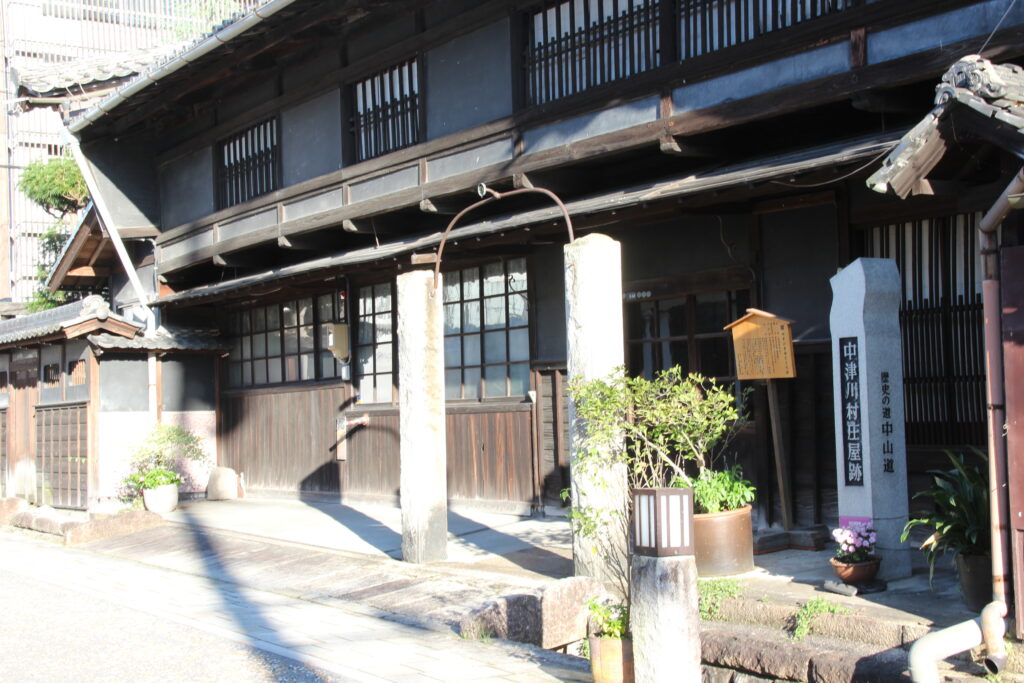
Nakatsugawa-juku was officially established in 1601 by order of Tokugawa Ieyasu, the first shogun of the Edo Shogunate. Beyond its role as a post town, it functioned as a distribution hub for timber from the Kiso region and agricultural products from the Mino region, developing commercially as well.
Honjin (inns for nobility) and waki-honjin (secondary inns for high-ranking officials) were located at the center of the post town, accommodating daimyo and court nobles. Additionally, numerous hatago (inns for common travelers) lined the streets, with over 50 accommodation facilities said to have existed during its peak.
Nakatsugawa-juku continued to prosper throughout the Edo period. With the introduction of railways in the Meiji era, its role gradually changed. However, its historical value remains highly regarded today, with many historical sites and traditions preserved.
Nakatsugawa-juku Historical Walking Tour
Walking Nakatsugawa-juku – The Beginning of the Samurai Trail
Recommended Walking Course
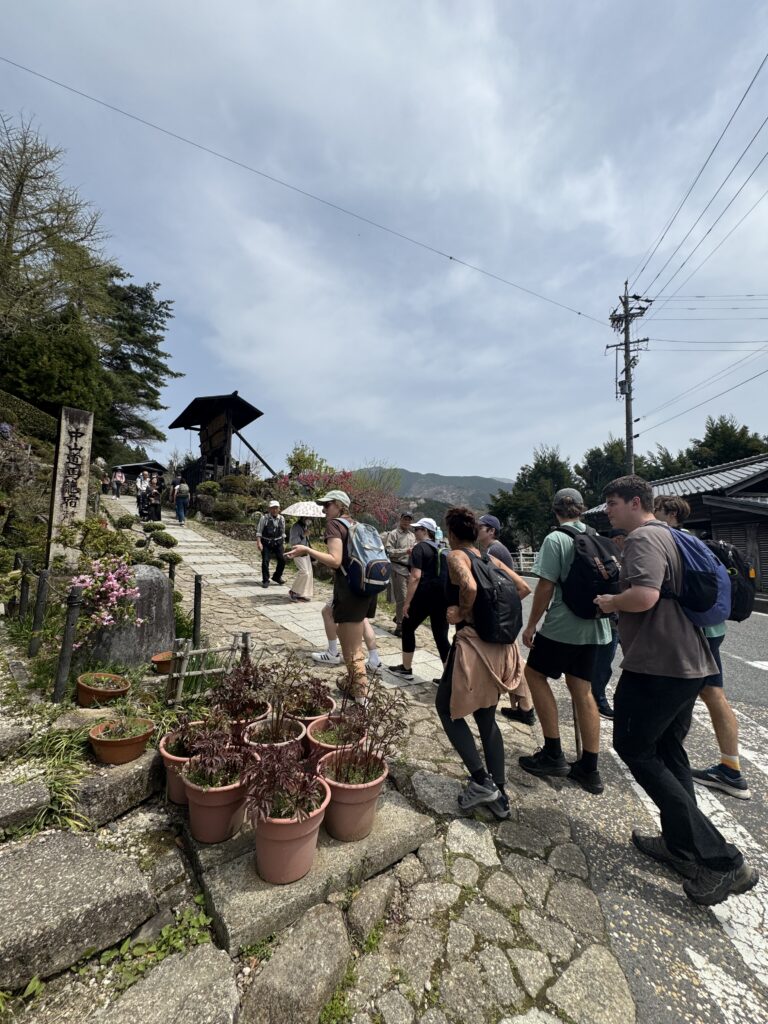
Nakatsugawa-juku is an ideal starting point for experiencing the Samurai Trail (Nakasendo) on foot. Here, we introduce a half-day course that even beginners can enjoy.
From Nakatsugawa Station to Magome-juku
This course starts at modern Nakatsugawa Station, passes through the center of the former Nakatsugawa-juku, and continues to the next post town, Magome-juku. The total distance is about 13 kilometers, taking about 1-2 hours at a leisurely pace.
Course Highlights
- Nakatsugawa Station (Start)
- Waki-honjin Hayashi Family
- Former Honjin Site
- Nakasendo Ichirizuka (distance marker)
- Ochiai-juku (small post town)
- Magome Pass
- Magome-juku (Goal)
Practical Information:
- Difficulty: Moderate (the climb to Magome Pass is somewhat steep)
- Best Season: Spring (April-May) and autumn (October-November)
- What to Bring: Comfortable walking shoes, water, light meals, rain gear
- Transportation: You can return to Nakatsugawa Station by bus from Magome-juku (several buses per day)
Featured tour
Nakatsugawa to Magome One-Day Hiking Tour: A guided tour walking from Nakatsugawa to Magome. Includes commentary on points of interest along the way and lunch. An electric-assist bicycle option is available for those who are not confident in their physical strength.
Seasonal Attractions
Spring (March-May)
In spring, cherry blossoms bloom beautifully in Nakatsugawa-juku. Honmachi Park, in particular, is known as a cherry blossom spot, with the best viewing time from early to mid-April. Also, during the fresh green season, the hiking courses along the Nakasendo are especially beautiful, making trekking while feeling the refreshing breeze highly recommended.
Summer (June-August)
Summer in Nakatsugawa-juku features many traditional festivals. Particularly, the “Oiden Festival” held in August is a magnificent celebration where elaborate portable shrines (mikoshi) parade through the town, making it well worth a visit.
Autumn (September-November)
Autumn might be the most beautiful season in Nakatsugawa. From mid-October to early November, the trees along the Nakasendo turn brilliantly colored, creating spectacular scenery. This season is also the harvest time for chestnuts, allowing you to taste various dishes and Japanese sweets made with fresh chestnuts.
Winter (December-February)
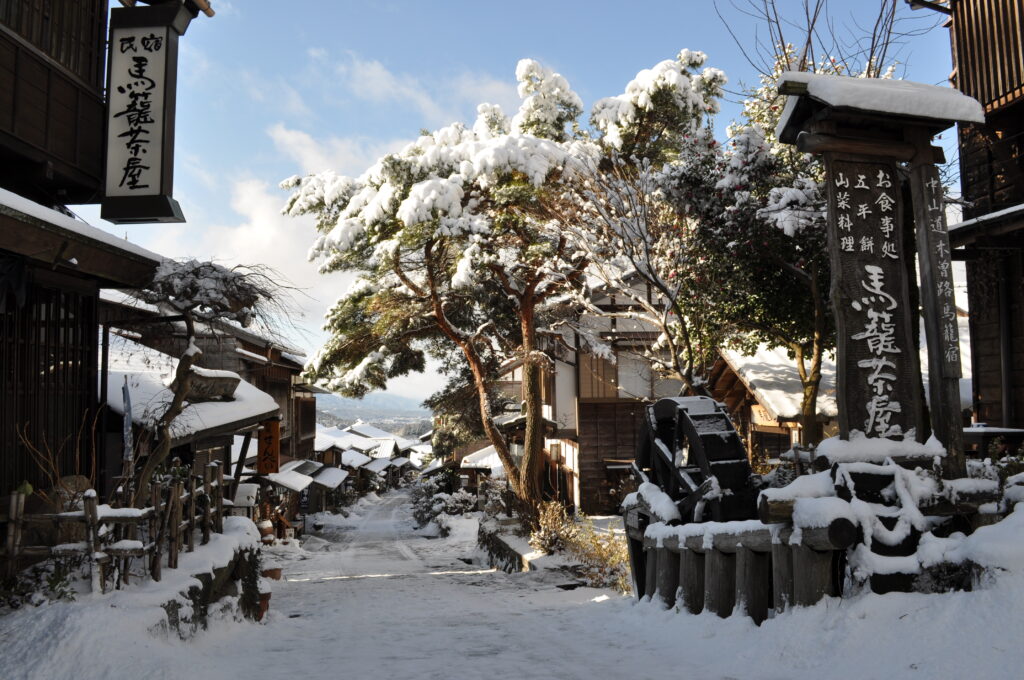
Nakatsugawa-juku in winter is filled with quiet charm. Occasional snow dyes the old townscape white, creating scenery like an Edo-period ukiyo-e. In the cold season, it’s also recommended to enjoy warm local cuisine or warm yourself at nearby hot spring facilities.
Practical Tips and Advice
Here are some practical tips for visiting Nakatsugawa-juku:
- Transportation Access: JR Nakatsugawa Station is the nearest station. It takes about 3 hours from Tokyo on the express “Wide View Shinano” and about 1 hour 15 minutes from Nagoya.
- Tourist Information Center: There is a tourist information center inside Nakatsugawa Station where you can obtain English pamphlets and maps.
- Trip Planning: Consider visiting adjacent post towns like Magome-juku and Tsumago-juku along with Nakatsugawa-juku to experience the charm of the Nakasendo more deeply.
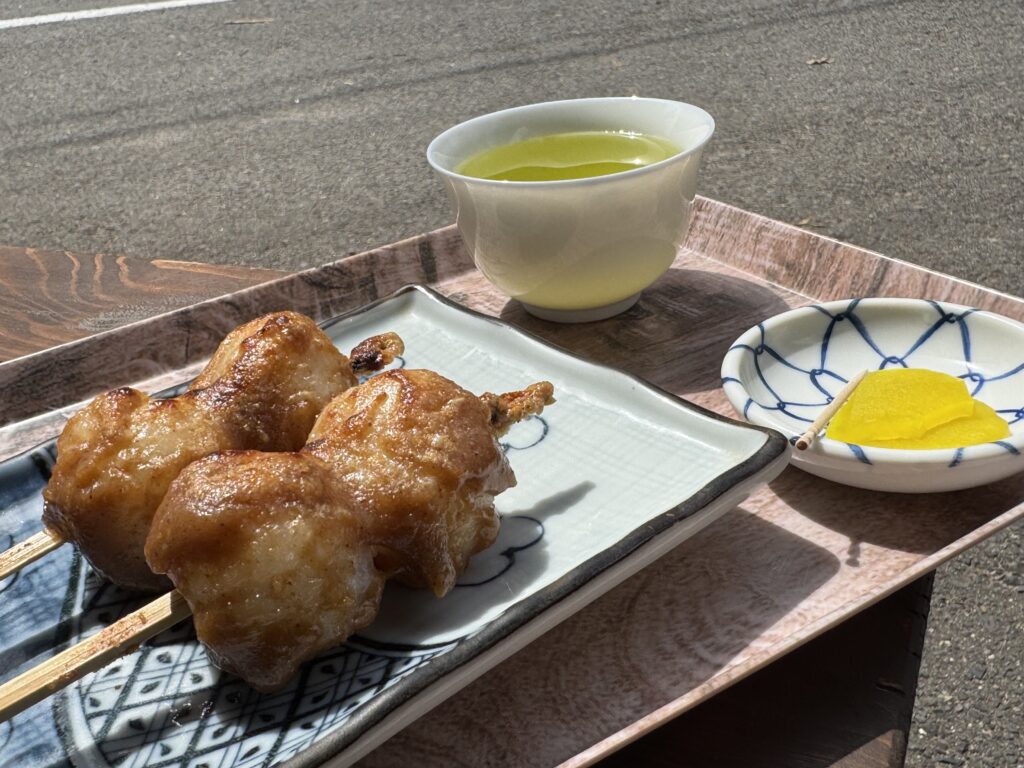
- Local Food: Besides the famous kurikinton (candied chestnuts), try local dishes like gohei-mochi (rice cakes) .
- Wi-Fi: Free Wi-Fi is available at Nakatsugawa Station and major tourist facilities, but mobile phone signals may be weak in mountainous areas.
A Historic Inn on the Samurai Road
The RYOKAN O – A Hidden Retreat Where You Can Experience the Feeling of Edo-Period Travelers with 120 Years of History
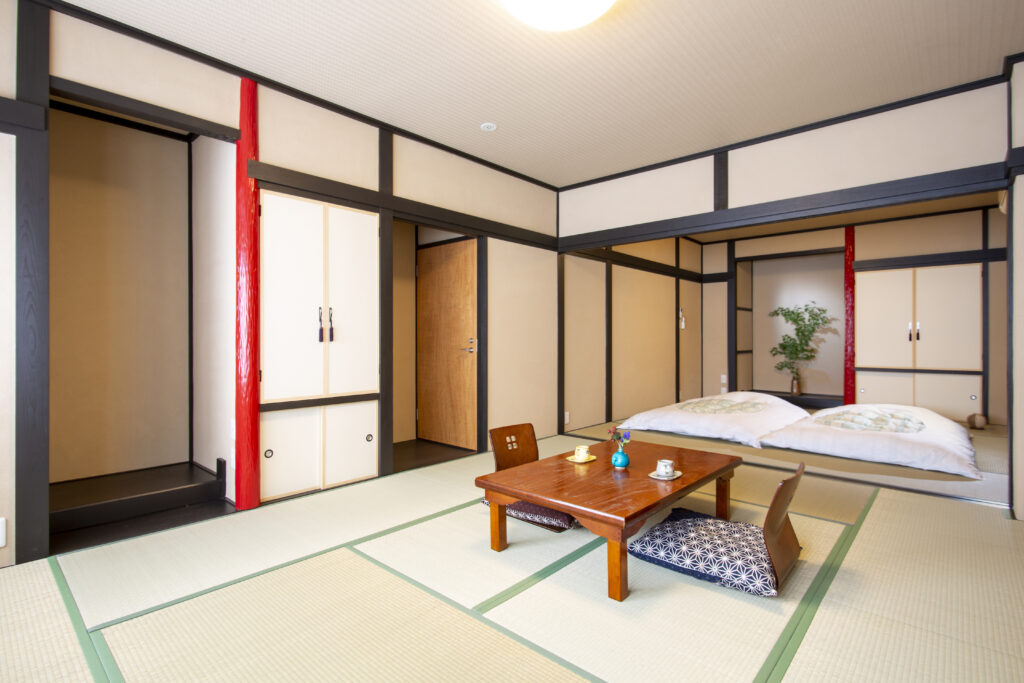
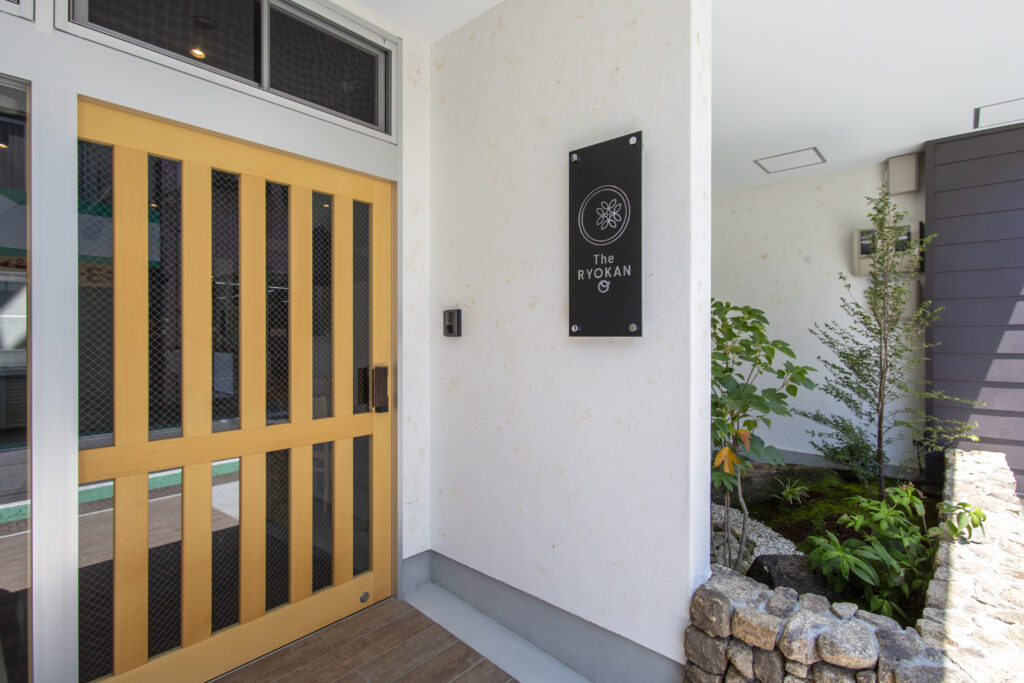
For a special stay in Nakatsugawa-juku, we recommend “The RYOKAN O.” This inn is a renovated traditional ryokan that has been in operation since the Edo period, retaining its traditional Japanese atmosphere while offering modern comforts.
At The RYOKAN O, you can enjoy various experiences beyond just staying overnight. The burgers made with Hida beef, a specialty of Gifu Prefecture, are particularly popular and captivate visitors.
Additionally, you can spend special time away from your busy daily life in a space where modern amenities and traditional hospitality are beautifully harmonized.






Conclusion – Nakatsugawa-juku, Where the Footsteps of Samurai Echo Today
Nakatsugawa-juku is not just a tourist destination, but a place where Japanese history and culture live on. By visiting here, you can walk the path that samurai once walked and see with your own eyes the landscapes that travelers of that time witnessed. The old buildings of the town, the cobblestone streets, and the warm hospitality of the local people will become unforgettable memories of your journey.
Traveling the Nakasendo is a valuable opportunity to escape the busyness of modern life and feel the slow passage of time. And spending the night at a historic inn like The RYOKAN O at the end of that journey becomes a special experience that brings you closer to the feelings of travelers in the Edo period.
Why not take your first step on a historical journey at Nakatsugawa-juku, the gateway to the Samurai Road? Unexpected discoveries and emotions surely await you.